Monday, 18 July 2011

Tourism in Japan 4 months after the quake,

Tourists are coming back to Japan, booking their holidays, planning their itineraries. Vincent Penez situated in Japan reports on the current state of the local tourism industry.As you know on March 11th Japan was hit by massive Tsunami causing terrible damages especially to the Fukushima nuclear plant. Four months later, the Japanese nation is gathering all its resources to rebuild the Tohoku area, fix the Fukushima nuclear plant and prove that Japan is safe to travel.
The tourists are more welcome than ever to help Japan. We already received many testimonials from tourists explaining how the Japanese people are thankful for tourists coming to Japan.
People have the image that Japan is a very small island nation, in fact Japan's 143,600 square miles make the island slightly smaller than California. From its northern most point in Hokkaido to its southern most point in Okinawa it is 1,400 miles or the distance from New York to Alabama.

The most popular tourist destinations are located far away from Fukushima. Tourists are coming back step by step and the Gion festival in Kyoto (ending on Sunday, July 17th) was really crowded as every year.
Hopefully, tourists will understand that while the damage to the Tohoku area is extreme, it is very far from most tourist destinations. Our company has two offices, one in the US and one in Japan. Our Office in Japan is located near Osaka and life for our staff is normal without any interruptions. Our President also brought his family to Japan for the summer just like every year.
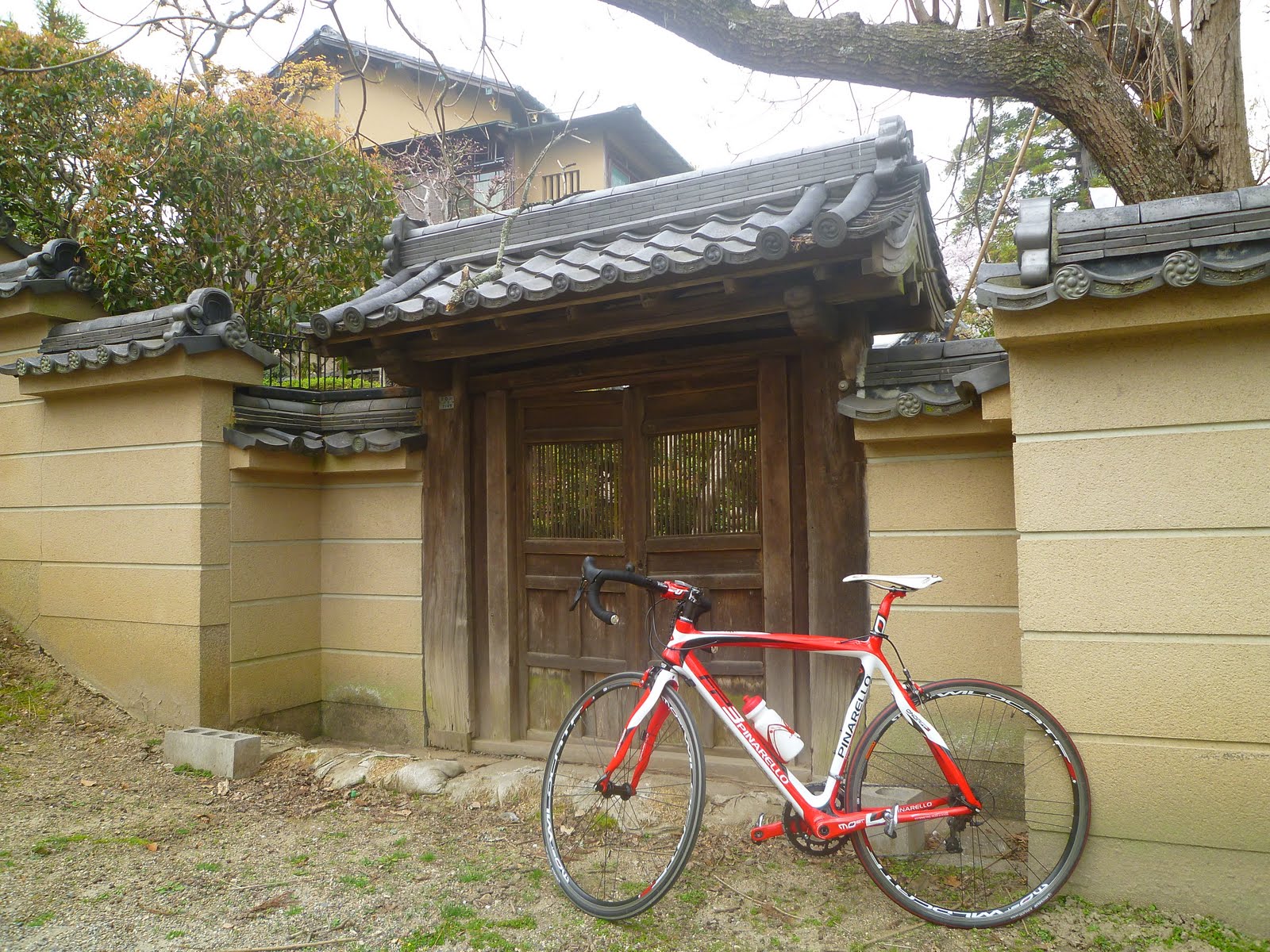
I personally live in Osaka and I would like to say that I did not change anything in my daily life after the quake, tsunami or nuclear accident and I still practice the same hobby as before. I go to work, take the same packed train every day, go out with my friends… And since I like to ride bicycle I still do it, maybe even more than before though it is now very hot and humid in Japan, I sincerely feel safe in Osaka.
Below are some links that explain the current situation in Japan and show that Japan is safe:
  • Disaster Prevention and Nuclear Safety Network for Nuclear Environment http://www.bousai.ne.jp/eng/
    This site shows real time maps of current radiation levels in Japan. As you can see the radiation level in most of the country is normal.
  • International Atomic Energy Agency (IAEA) http://www.iaea.org/About/japan-infosheet.html
    To me this is the most important link as the IAEA has nothing to gain from you traveling to Japan. They are simply stating the facts.
  • Japan is already rebuilding and the areas hit by the tsunami are much cleaner than before and people are living their normal live again. To have a good idea of the situation in Tohoku please check the following link: http://photogallery.thestar.com/1006372
The most important information I would like to give is that tourists who canceled their travel to Japan after the quake are now coming back. Most of them are planning to visit Japan in autumn and some are already making reservations for spring 2012.
By Vincent Penez

Monday, 6 June 2011

Is it a good time to visit Japan ? Yes !

I would like you and others to know that this is a very nice time to visit
Japan.  We found that there were very few Caucasian tourists most places
that we went.  We asked the staff everywhere we stayed how business was and
it was way down for all of them.  They have had almost all their
reservations from the US canceled.
Tokyo Tower
Before leaving for Japan I worried that the "mood" in Tokyo and Kyoto would
be one of depression and sadness.  I did not find that at all.  People in
Japan were gracious and welcoming as usual.  We found marketplaces and
stores were bustling and vibrant, the temples and shrines were full of
visiting Japanese students and their teachers who were giggling and looked
like kids anywhere out on a field trip.  Restaurants may not have been as
crowded as usual, I wouldn't know, but many that we went to were full of
Japanese patrons.

We did experience some of the electricity savings measures:  some places did
not have air conditioning on and we were there during a hot spell . . .
temperatures in 20's C some days and it was a little bit uncomfortable in
some locations.  The hotels and hostels we stayed at had individual room A/C
that we could turn on and set the temperature as we wished.  Also many, but
not all of the escalators in the train stations were turned off.  But if you
needed an elevator they were running.

I personally would urge Americans who were considering visiting Japan to go
now or soon.   Other than where the devastation has occurred it remains an
incredibly beautiful country in every way.  The Japanese people are happy to
see us and by spending our money in Japan we are helping their economy, and
the people whose livelihood depends on tourism.

 I lived in Japan for several years as a child and this is the first time I
returned, many years later.  Much has changed in Japan since then, but I
found that it overwhelming retains the unique cultural and physical
characteristics that make it so interesting and enjoyable to visit.

Thank you for this opportunity to share my impressions.

Sincerely,
Diane Saulter

Monday, 23 May 2011

Cycling in Nara


People that are only watching and listening to the Western media might have a terrible image of the situation in Japan. I sincerely think that those media are looking for some sensational stories to sell and they do not realize how much they can be destructive for the whole Japanese Nation. I live in Osaka for about 2 years and I did not escape to France (I am French) after the March 11th.
What I would like to say here is that I did not change anything in my daily life after the quake, tsunami or nuclear accident and I still practice the same hobby than before.
I go to work, take the same packed train everyday, go out with my friends… And as I like to ride bicycle I still do it, maybe even more than before.
Tea field
Every Saturdays I take my bike from Osaka, I try to reach roads with less traffic. This time I have decided to go to Nara.

When I first came to Japan, I only used trains to move around Kansai, and in my mind Nara was really far from Osaka. Once I could reach Nara by bicycle, I realized that Nara, Kobe, Osaka and Kyoto are really close to each other and that actually the trains between each city are pretty slow. Between Osaka and Nara there are about 50 kms (about 30 miles), if I am in a good day I need less than 2 hours to arrive at the Nara Park in the center of Nara.

The Nara Park is a huge park located on the East side of the city. The park is actually connected to mountains and wild spaces. This park is popular for its giant Buddha statue, the Todaiji, temples… and for the hundreds of deer that make this park so special.

One of the best inns to spend a night around the Nara Park is the Kankaso ryokan; this traditional ryokan is indeed within the Nara Park.
Here you can see a picture of my bike in front of the Kankaso building.
Kankaso
 From the Nara Park I could climb the Mount Wakakusa, and later I found some tea fields, what a surprise! Tea fields do not exist in France or even in the whole Europe, so for me it really is an exotic landscape. I also found out that many of my Japanese friends did not know about tea fields in Nara.

Nara Park
So from Osaka and in less than 4 hours by bicycle, I could see the Nara Park, many deer and tea fields; a very enjoyable day.

Vincent Penez

Monday, 16 May 2011

A Birthday celebration in Japan !

I traveled to Japan from 11 to 22nd April 2011: Tokyo, Nagoya, Takayama, Kyoto, Nara, Himeji, Koyasan and return to Tokyo. The voyage has been organized by me, without travel agencies. I was traveling accompanied by my adolescent son. He completed 17 years old at 14th April, when we were at Takayama. We had the opportunity to see Takayama Spring Festival. That`s wonderful. About  your question: what is happening after the quake in these cities, I answer that we felt always secure,  even at Tokyo, were we felt others quakes. We saw the Japanese people living normally, calm. When I told to my family and friends in Portugal that I would maintain my voyage to Japan as planned, some tried to discourage me because they were afraid that something could happen to us. But I answered that I was reading news from several countries and the WHO did not put any restrictions to  voyages to Japan. I´m a doctor, I had to believe it. It was also my way to help Japan in such difficult moment.
Mount Koya

And I am happy because I decided this way. I had the gift  to see hundreds of Sakura plenty of flowers and so many others beautiful things and to know a little of Japanese culture. All were so nice, helping when we were confuse, looking at the map. Japanese approached us, asking if we needed help and, if they didn´t know, they asked to others. And so We did our voyage. At the end my son said " Everything has been better than I had imagined". My son will never forget this anniversary.

By Georgina Maia

Sunday, 15 May 2011

Travel in Japan in April 2011

Myself and my mother traveled to Japan on 8/4/11 - 27/4/11. We found the people welcoming and really willing to help tourists with only a very basic grasp of Japanese. We flew into Kansai and traveled to Osaka, Nara, Koya-san, Kanazawa, Takayama, Nagoya, Hiroshima, Miyajima & Kyoto. I can safely say that had I not known about the chained disasters (and been watching the news and travel advisories very closely before leaving), the only indication I would have had that there was a problem within the country was the sheer lack of other tourists. We spoke to many of the hotel, ryokan and hostel staff while traveling and all mentioned the huge numbers of visitors not in attendance. One particular hotel told us that they usually would usually at that time of the year have no vacancies, but that this year we were their only visitor during that week.
Takayama
Many of my colleagues spoke of fears before I left such as lack of food, electricity cuts, transport breakdowns and nuclear radiation. Indeed I had originally been intending to travel with a friend who chose to pull out a fortnight before departure. Once into the country however, the only example I experienced over the 20 days was 1 train not able to get through due to a signal box further up the line being hit by lightning.
Essentially, from what I was able to tell, in areas not directly affected by the quake, tsunami & malfunctioning power plant, life seems to be going on as usual. During the cherry blossom period Hanami parties were going on, in Takayama the Spring Festival was in full swing and the Kyoto markets were as amazing as I'd heard they could be. I think that many tourists have been put off by sensationalist media journalism and it's a real shame as it has really hurt the Japanese economy more than anything else.

I hope that this information has been of some use to you and your website. If you would like any further information or clarification on areas, please don't hesitate to e-mail me.

Kirsten Stroak

Travel information from our guest

We were in Tokyo at the end of March and Kyoto the beginning of April. As we had never been to Japan before it seemed that life was carrying on as usual. The only things we know we missed in Tokyo were
the observation floor of the Metropolitan Government Building which was closed to tourists, the tuna auction which was also closed to tourists. The JR train was not going to and from Narita airport at the end of March or mid-April.

Ginkakujin
People we spoke to who had been to Kyoto before during cherry blossom season said it was very quiet this year, but we found it pretty busy, especially on weekends when it was very busy. We were able to get into visit the Katsura Imperial Villa which had been fully booked when we tried to reserve in mid-February in advance for early April.

In Kanazawa we were the only ones in the lovely garden and wonderful tea ceremony at Gyoku-sen-en and it was also easy to get into the Myoryuji Temple...both of which require a reservation 1 to 2 days prior.

We found that people were really happy to seen us foreigners and we had a fabulous trip.

JL, Canada

Sunday, 8 May 2011

Guest's visit to Tokyo, Nagoya, Gifu, Takayama, Shirakawa-go,...

My parents and I have been traveling around Japan between April 10th and
23rd. (And I live in Gifu City).
Some information on the areas we went...

TOKYO... N'ex had just started services again. We had absolutely NO TROUBLE
with any train/ subway delays/ route closures because of 'blackouts'. Though
we were mostly using main routes.
Nagoya

We actually felt several earthquakes while in Tokyo! We had some big shakes
in our hotel (sorry, not booked through JGH!), but they felt 'stronger'
because we were on the 10th floor, in a new building that is built to sway.
We also felt several as we were in the depa-chika (department store
basement) in Ginza. They announced (in japanese) the earthquake warnings...
several STAFF and general public came over to us and asked if we understood/
were ok (very touching!).
Many of the conbini (convenience stores) still had a limit of 3 small or 1
large water bottles purchasable per person. (to avoid un-necessary
stock-piling).
Many subways/ train stations had only half their platform lights on, still
plenty to see by, and a little more relaxing on the eyes! Many stations had
also turned off most of their escalators off.
We'd heard that many of the large TV billboards/ neon lights were off...
however, while we were there most were on... just as normal...
Oh, the Tokyo Metropolitan Government Building Observation Deck was
closed...

Nagoya, Gifu, Takayama/ Shirakawa-go, Kyoto, Nara, Osaka (other places we
visited) were all 'business as usual', no power saving or anything
special... if you didn't know better you'd have no idea of the disaster in
northern Japan! They've generally calmed down now, but there have been lots
more people out on street corners collecting donations for Red Cross and
other charities to help out... (and alot more donation boxes on shop
counters).
While there are definitely alot less foreign tourists, there is still lots
of domestic tourism. We were in Takayama for the second day of their
festival, and there were heaps of people. Kyoto was full of people,
especially japanese school groups (and we saw more foreigners in one day in
Kyoto than in the whole two weeks elsewhere!). I was in Shirakawa-go again
last week (May 4th) and it was packed with people.
Actually this spring has been pretty cold, so the sakura where a little slow
blooming in many places, and I guess people haven't really been getting out
as much... things are picking up again and more domestic tourism is
happening. I noticed alot of the smaller, local spring festivals were
cancelled in April; but the big events are still on, and people are looking
to regain more happiness.

Locally around Nagoya/ Gifu I have noticed that shelves are generally fully
stocked, there is no shortage of supplies. ... the only shortage I've
noticed is some cigarette brands... but that doesn't bother me!
We noticed in the more tourist places (Ryokan Shimizu in Kyoto; info center
by Asakusa in Tokyo etc) that the japanese people were even more welcoming,
and grateful that we foreigners were still travelling to their country; it
was very sweet!

I actually haven't really heard anything lately about radiation levels
around the country; I guess there are no major concerns from the Fukushima
nuclear plant for people outside the evacuation areas. At least the
government/ world are thinking about/ investigating the safety of other
nuclear power plants (my nearest in Shizuoka is going to be shut down
hopefully... a good idea, considering they're still predicting a massive
quake to hit the central japan region; an event that is 'overdue'!).

SO, come back to Japan everyone... life goes on as usual! ... it's kind of
nice at the moment, because some places are a little more peaceful, less
crowded... but on the flip-side, you miss the experience of the crazy
crowds... although, then again, Osaka was mad... the station and
Shinsaibashi shopping areas were packed!

Hope this has been a little help, please feel free to email with any
specific questions and I'll attempt to help with my knowledge!

Regards
Charlotte Newman